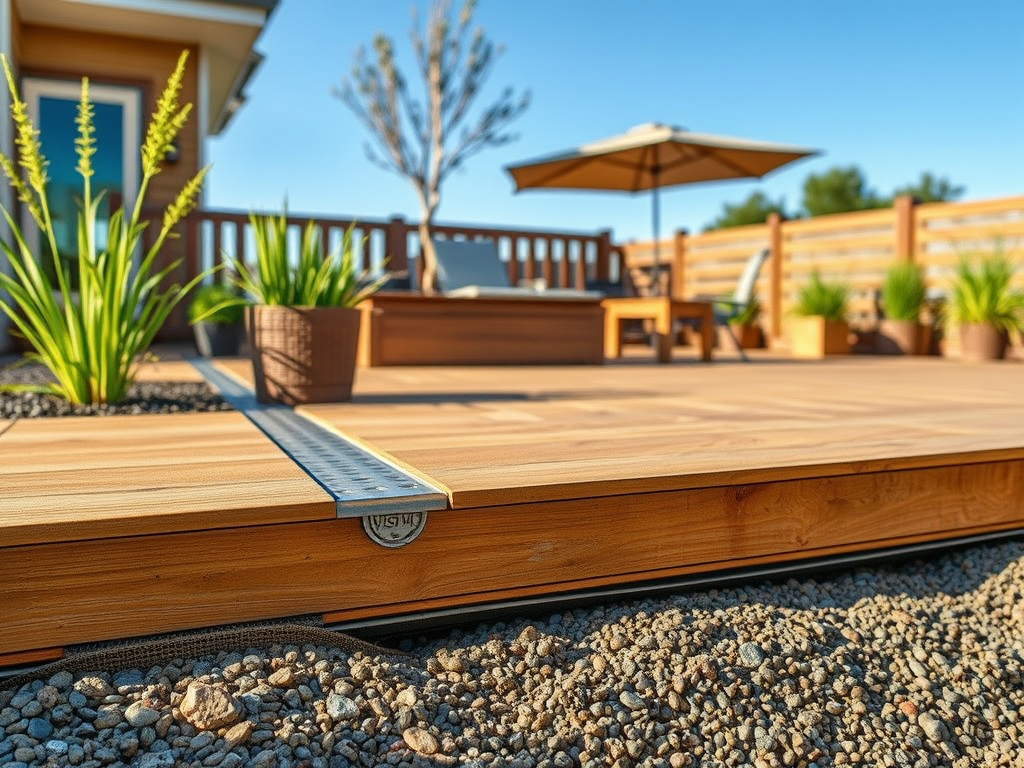
Start with the site conditions
- check whether the ground already drains well
- look for low spots where water can collect
- plan the deck so water moves away instead of sitting underneath
Build in drainage from the start
- create a slight slope away from the house where the design calls for it
- use gravel or other draining base materials below the deck where appropriate
- consider drainage fabric, drains, or channels if the site needs more control
Small installation details matter too
- lift the deck boards enough to allow airflow underneath
- keep consistent spacing between boards
- protect parts of the framing that are more exposed to trapped moisture
Drainage still needs maintenance
- clear out debris
- keep channels and drains open
- inspect the deck after heavy rain to see whether water is moving the way you expected
If drainage is handled poorly, moisture problems often show up slowly. A better plan up front usually means a longer-lasting structure.
Use the deck calculator once the base plan is clear so the rest of the project can move forward with a more accurate material estimate.