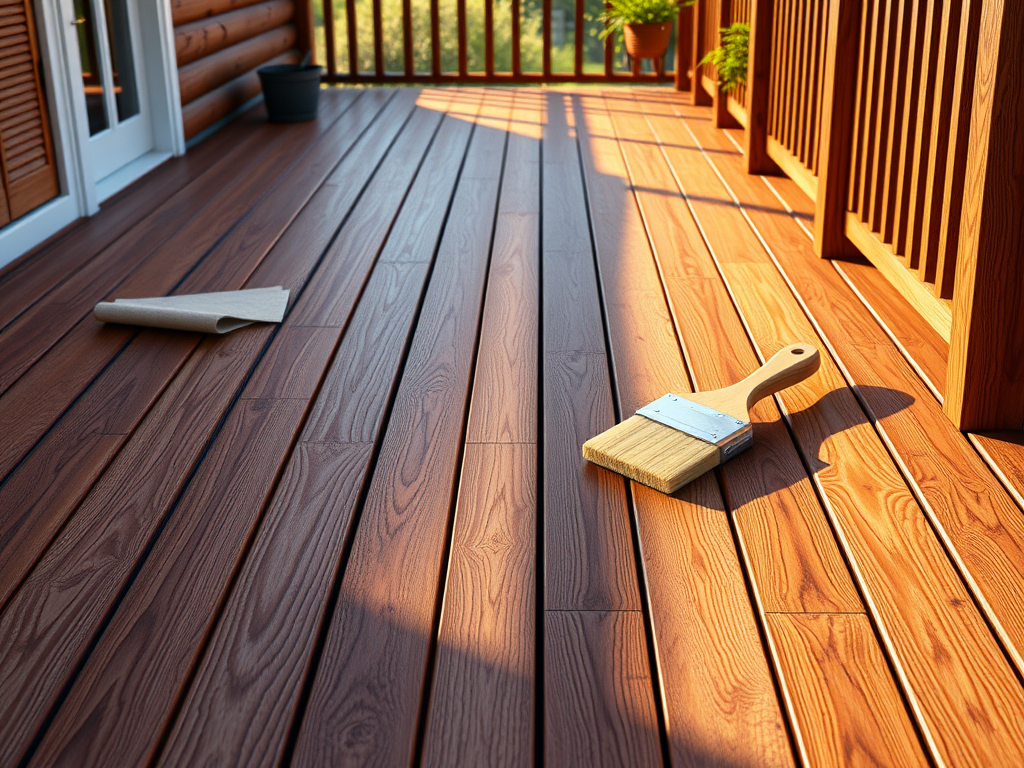
Start with proper preparation
- Clean the deck well: remove dirt, algae, and old surface buildup before you apply anything new.
- Smooth rough areas if needed: sanding can help open the wood surface and improve how the finish is absorbed.
- Let the wood dry fully: applying stain, paint, or oil to damp wood usually leads to uneven results.
Staining deck boards
- Why people choose stain: stain protects the wood while still letting some of the natural grain show through.
- How to apply it: a brush or roller can work, but keep the coverage even and work with the grain.
- Maintenance cycle: many decks need a new coat every 1 to 3 years depending on wear and exposure.
Painting deck boards
- Why paint is different: paint gives a more solid finish and can cover color variation, but it changes the look more than stain does.
- How to apply it: use the right primer and follow the product system rather than treating it like indoor paint.
- Watch for wear: damaged painted surfaces should be repaired early before peeling or trapped moisture becomes a larger problem.
Oil and protective treatments
- Why oil still matters: oil-based or similar penetrating treatments can help the wood resist moisture and drying out.
- How to apply it: apply evenly and wipe away excess if the product instructions call for it.
- Maintenance cycle: some treatments may need refreshing every season or every year.
Practical finishing tips
- work in dry weather when temperatures are moderate
- avoid strong direct sun during application if the product dries too quickly
- test the finish in a small area first so the color and sheen do not surprise you
Plan material quantities first
A cleaner build starts with the right material estimate. Use the deck calculator to estimate decking and screw quantities before you move on to finishing and protection.