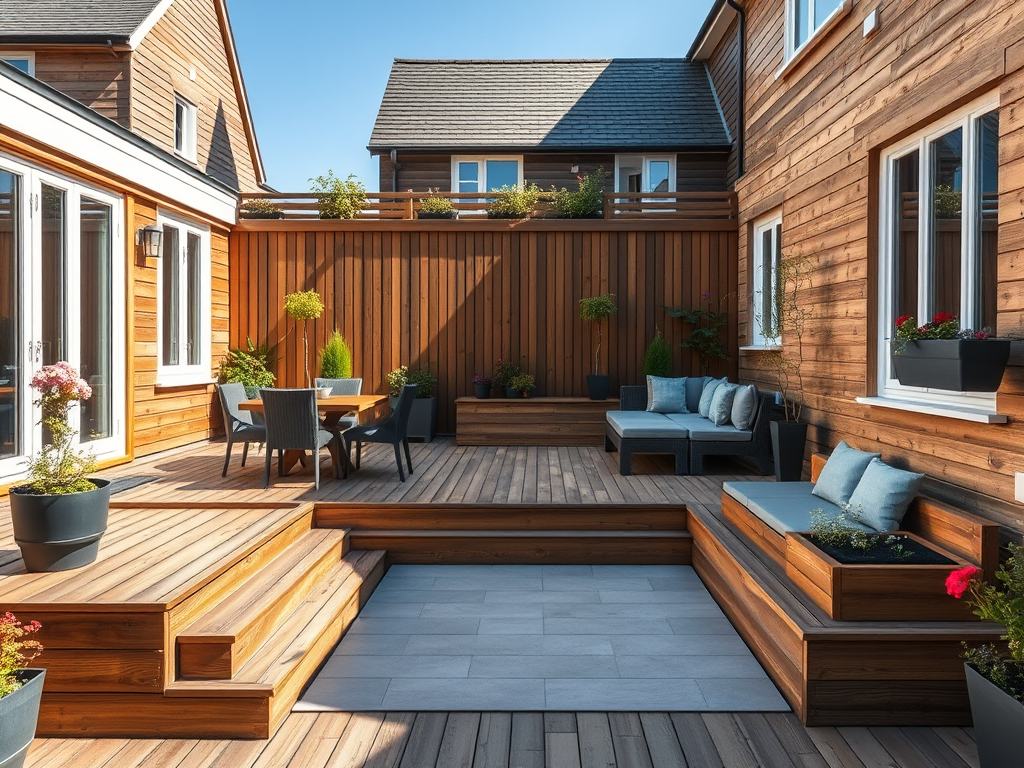
Plan the extension before you build
- measure both the existing deck and the new area
- sketch how the added section should work
- decide whether the new area is for dining, lounging, grilling, or another use
- choose materials that either match the existing deck or create a deliberate contrast
Use levels and zones carefully
- small level changes can help define separate uses
- steps can make transitions feel intentional
- built-in benches or planters can divide space without making it feel closed in
Keep the structure practical
- the new section still needs a stable base
- the framing should tie into the existing structure in a way that feels solid
- drainage under the added area still matters
Add comfort and function where it helps
- a pergola or cover can improve shade and protection
- lighting can make the deck more usable in the evening
- furniture and textiles can reinforce the purpose of each zone
Start with a material estimate
Use the deck calculator to estimate decking and screw quantities for the added area before you start construction.