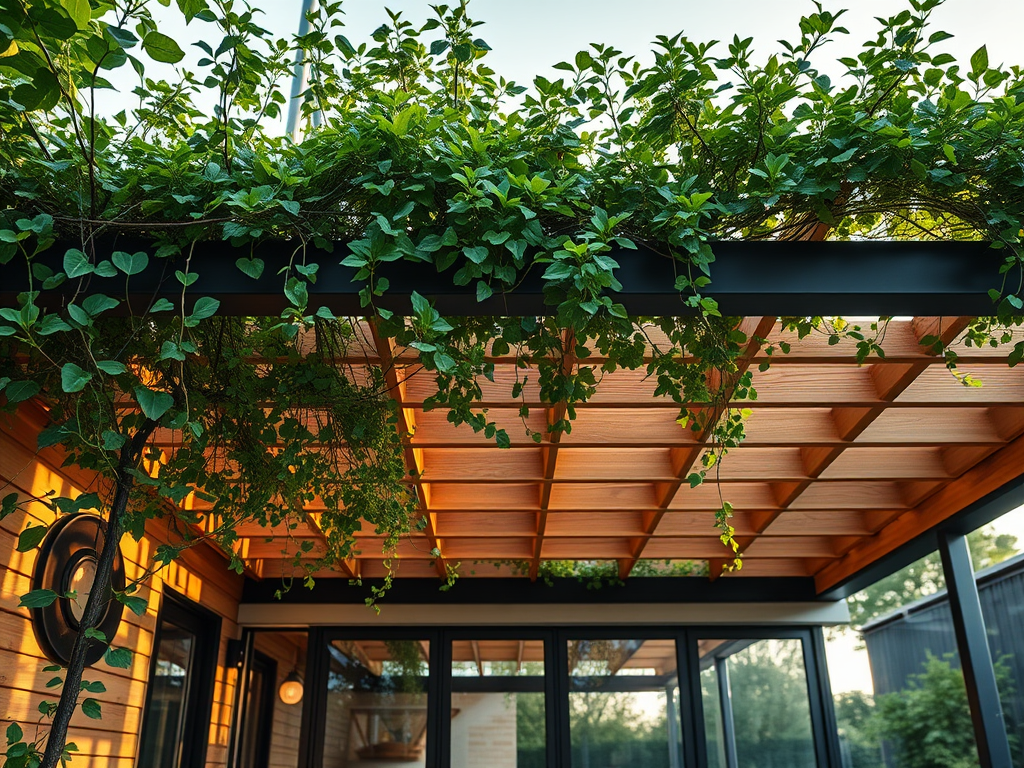
Start with the purpose
- Do you want shade?
- Do you want rain protection?
- Do you mainly want a visual frame for the deck?
The answer affects both design and structure.
Think about size and placement
Measure the deck and define exactly which area needs to be covered. A pergola or roof that looks good on paper can feel too small or too heavy once it is built, so it helps to think about furniture layout and circulation early.
Choose materials that fit the project
- Wood: approachable to build with and easy to match to many decks
- Metal: cleaner look and usually lower maintenance
- Polycarbonate or similar roof panels: useful when you want rain protection without blocking all light
- Fabric shade systems: flexible if you want lighter seasonal shade
Design choices change the feel of the deck
- Open pergola slats: lighter visual look and partial shade
- Solid roof: stronger weather protection
- Privacy screens or curtains: more shelter from wind and views
- Integrated lighting: easier to include if it is planned before the structure is finished
Build on a stable base
Even a lighter pergola still needs proper support. Make sure the posts, footings, and structural connections are appropriate for the load and the local rules.
Use the deck calculator as part of the larger plan
If the deck project includes a pergola or cover, start by getting the base deck quantity under control. The deck calculator helps you estimate decking and screw quantities before you layer on the overhead structure.