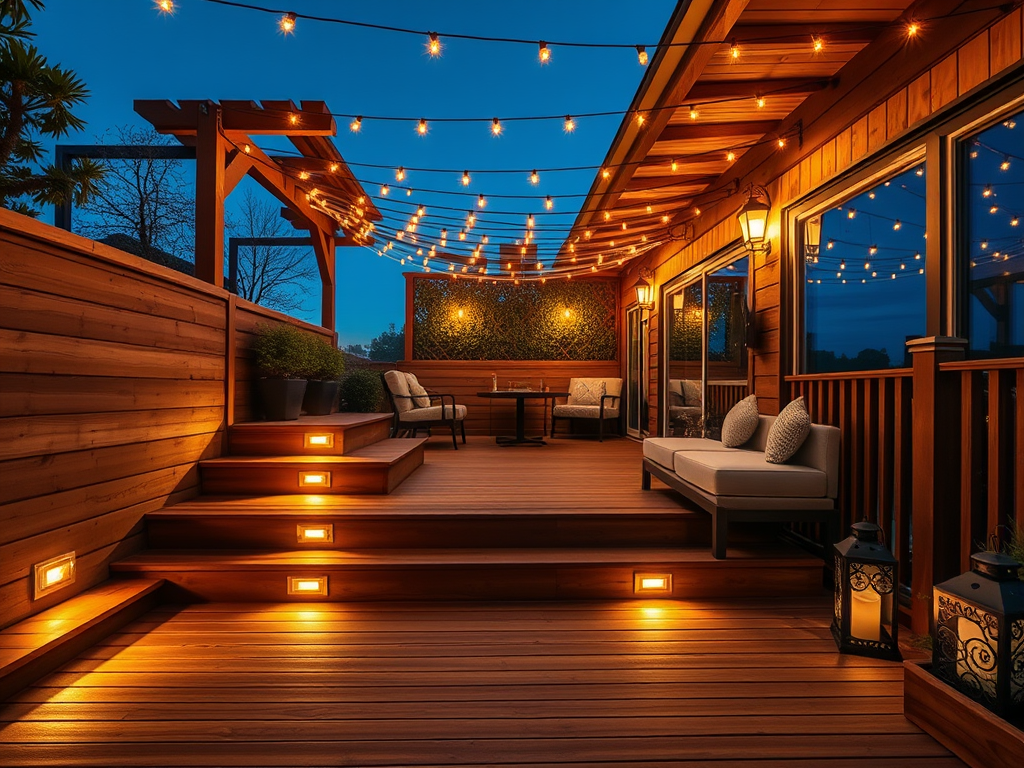
1. Functional lighting
- Spotlights: useful for highlighting dining areas, walkways, or other parts of the deck you use often.
- Step lights: lighting built into stairs improves safety and gives a clean, understated look.
- Wall lights: a good choice near doors, walls, and entry points. Choose outdoor-rated fixtures that can handle weather exposure.
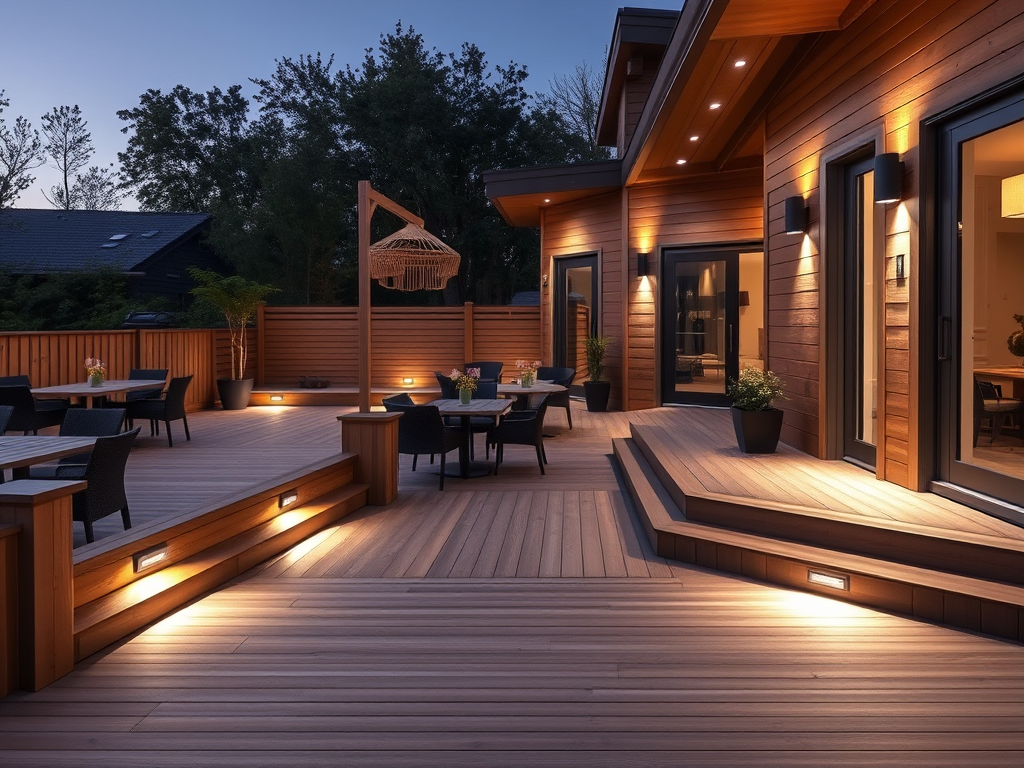
2. Ambient lighting
- String lights: an easy way to make the deck feel warmer and more welcoming.
- Lanterns: flexible and movable, so they work well when you want to define a small zone without permanent wiring.
- LED strip lighting: useful under railings, benches, or other edges where indirect light gives a softer effect.
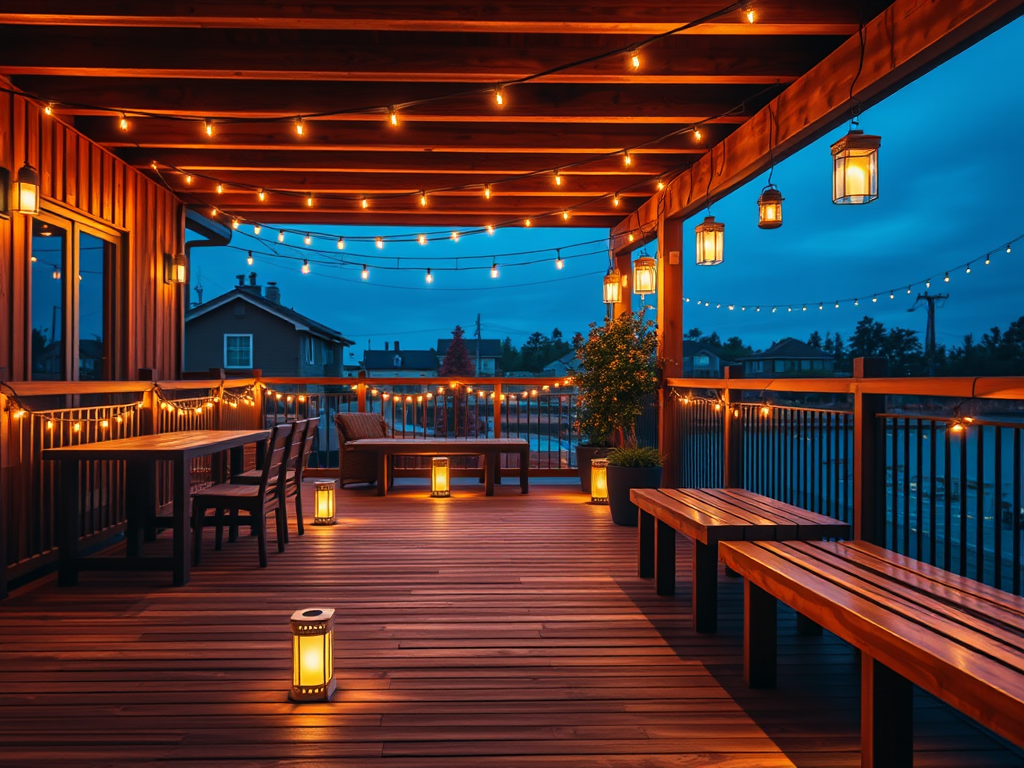
3. Solar and energy-efficient lighting
- Solar lights: easy to install and useful where you do not want to run new wiring.
- LED fixtures: low energy use and long service life make these one of the most practical choices for decks.
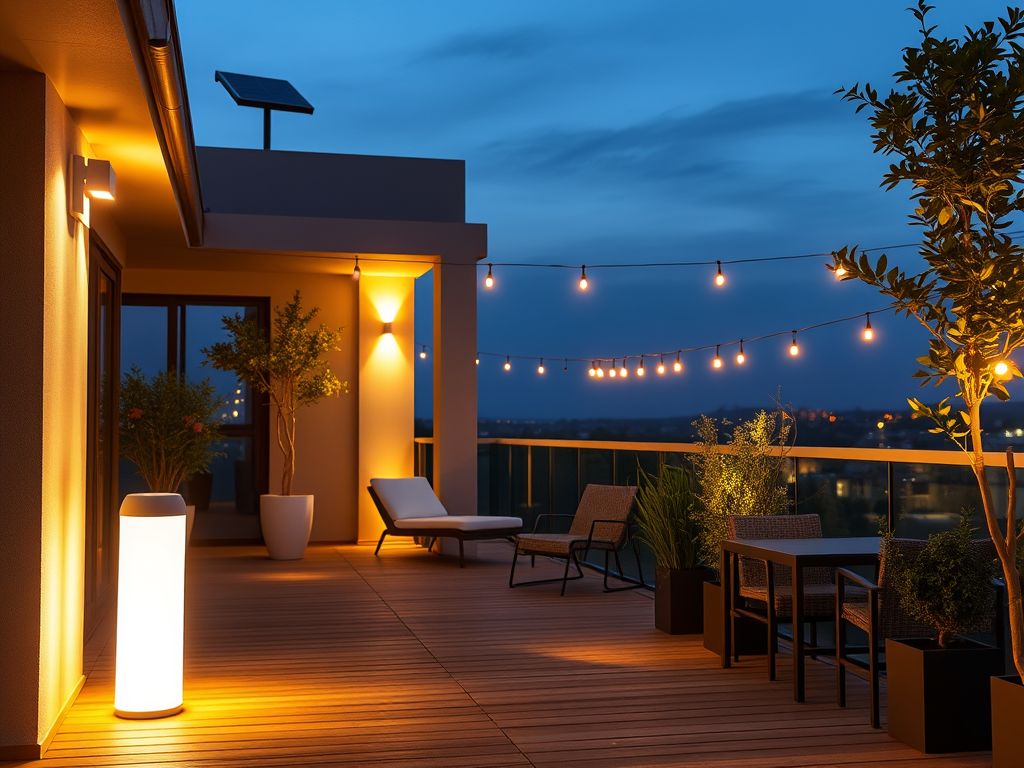
4. Integrated lighting solutions
- Recessed lighting: built-in deck or railing lights create a cleaner, more minimalist look.
- Motion-sensor lighting: helpful for safety, convenience, and lower energy use.
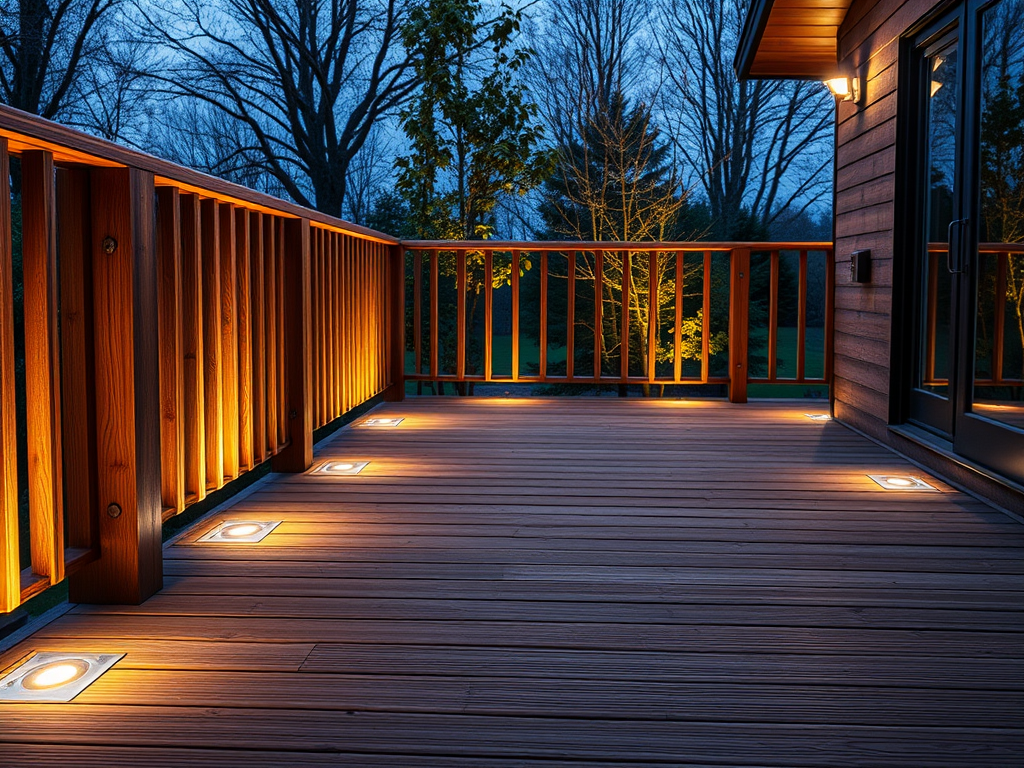
5. Plan the lighting before the deck is finished
- Make a lighting plan: cover both practical lighting needs and atmosphere.
- Layer different light sources: combining several light levels usually works better than relying on one bright fixture.
- Choose the right color temperature: warm white lighting in roughly the 2700K to 3000K range often feels more comfortable outdoors than colder light.
Use the deck calculator as part of the planning
If you plan lighting early, it becomes much easier to integrate conduit runs, cutouts, and layout choices into the full deck design. The deck calculator helps you estimate decking and screw quantities so the overall project is easier to plan.