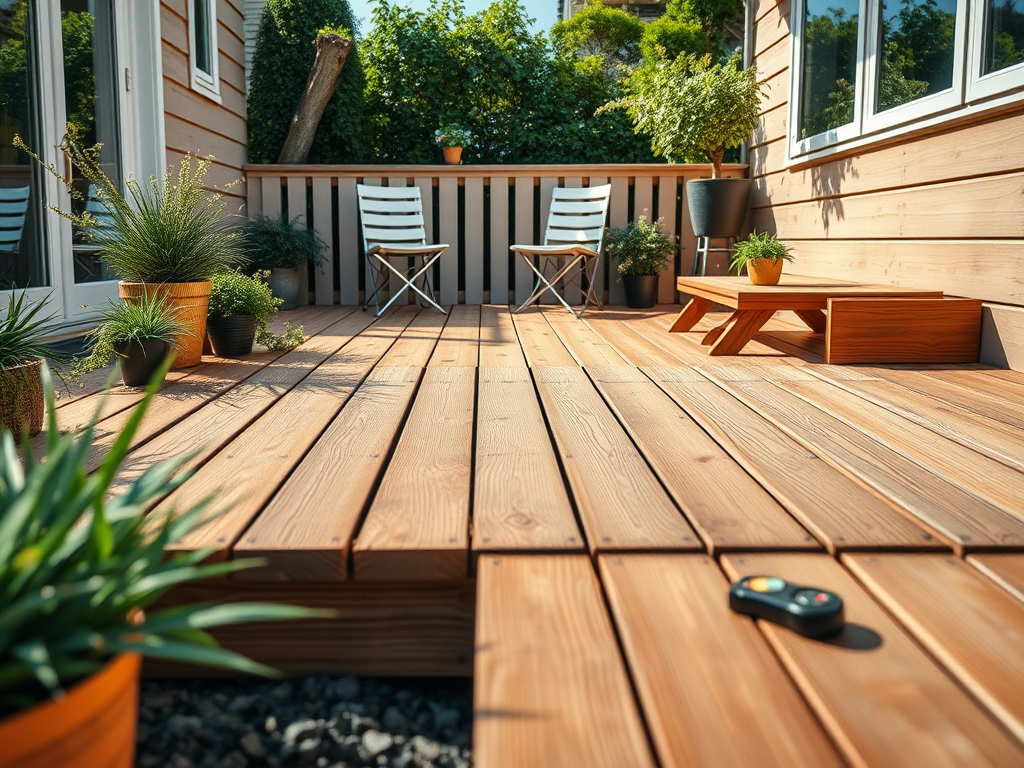
Poor planning
- Problem: weak measurements and vague planning often lead to bad material orders and awkward construction decisions.
- Better approach: measure carefully, use the deck calculator, and sketch the layout before you start.
Weak or uneven support
- Problem: a poor base can cause the deck to settle, move, or go out of level.
- Better approach: prepare the site properly, improve drainage, and choose support methods that fit the project.
Joists spaced too far apart
- Problem: too much spacing can lead to flex, bounce, or premature board problems.
- Better approach: follow the board manufacturer guidance and confirm the joist layout before installation.
Poor deck board installation
- Problem: bad fastening or too little gap between boards can create moisture and cracking issues.
- Better approach: use appropriate fasteners, keep spacing consistent, and install the boards with drainage in mind.
Skipping finish and protection
- Problem: untreated wood often wears faster than expected.
- Better approach: use a finish or protection system that suits the decking material and climate.
Ignoring drainage
- Problem: trapped water underneath the deck can shorten the life of both the boards and the framing.
- Better approach: improve slope, airflow, and water runoff from the start.
Forgetting maintenance
- Problem: even a well-built deck can decline quickly without basic upkeep.
- Better approach: plan regular cleaning, inspections, and touch-up work.
Start with a better material baseline
If you want fewer mistakes from the start, use the deck calculator before you buy materials. A more realistic quantity estimate makes the whole project easier to manage.