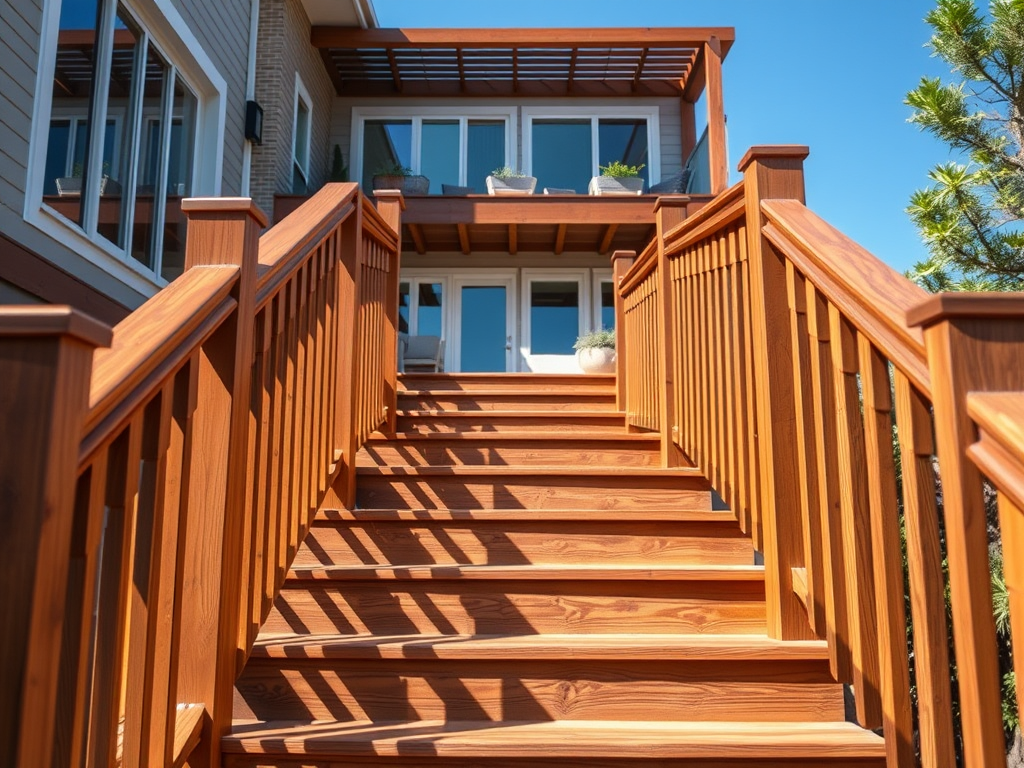
Plan the stairs first
- Measure the total rise and run: start with the height from the ground to the deck and divide it into consistent step heights.
- Keep the treads practical: comfortable stairs need enough depth for stable footing, not just the minimum that happens to fit.
Build the stair structure
- Cut the stringers carefully: use durable outdoor-rated material, or buy pre-cut stringers if that better fits the project.
- Install the treads evenly: stainless or exterior-rated fasteners help the stairs hold up better outdoors.
- Check for movement: the stairs should feel solid and be anchored properly to both the deck and the ground support.
Plan the railings with safety in mind
- Railing height matters: many decks need a railing once the height changes enough to create a fall risk.
- Keep openings safe: spacing between balusters should stay narrow enough to reduce safety problems.
- Choose a layout that fits the deck style: vertical balusters, horizontal details, or simpler screen-style layouts can all work if the structure is sound.
Build the railings properly
- Anchor the posts well: railing posts need solid attachment to the deck framing, not just the surface boards.
- Space the infill evenly: use blocks or spacers so the finished result looks clean and consistent.
- Finish with a comfortable top rail: this helps the railing feel more polished and easier to use.
Do not skip finish and maintenance
- Protect the materials: stain, paint, oil, or another appropriate finish can help extend service life.
- Inspect regularly: screws, connectors, and rail posts should be checked over time to keep everything safe and stable.
Use the deck calculator while planning
A better material estimate makes it easier to plan both the deck surface and the add-on elements around it. Use the deck calculator to estimate decking and screw quantities before you build the full project.